Many of my trips start with one experience I can’t stop thinking about, and this was definitely one of them.
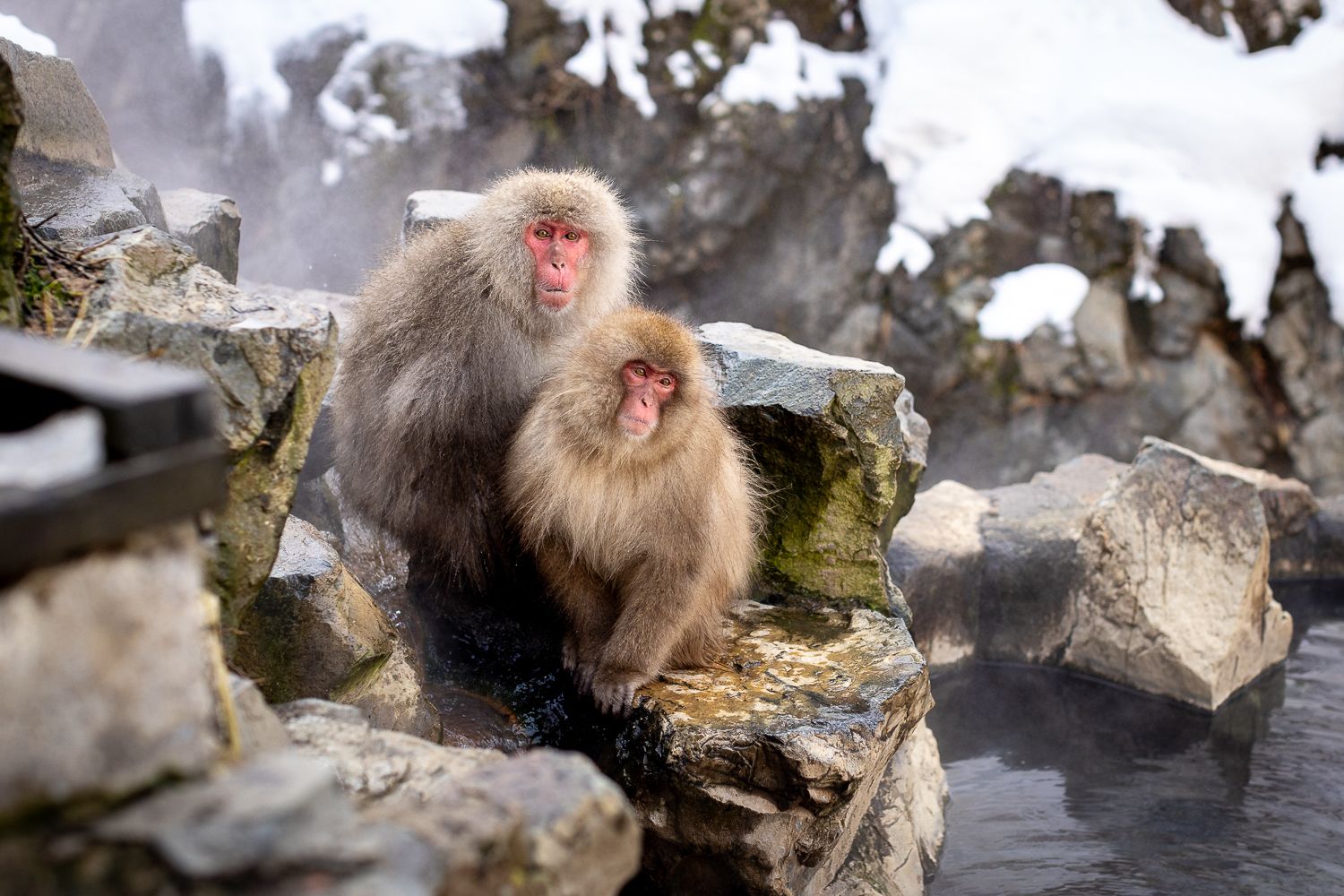
My entire inspiration for my first trip to Japan actually started with a wish to see these little snow monkeys. After stumbling across a photograph of the snow monkeys, I couldn’t get the idea of wild Japanese macaques sitting in steaming hot springs, surrounded by snow-capped mountains, out of my head. There was something so human about the monkeys seeking out this natural hot tubbing experience in the middle of winter.
Deep in the mountains of Nagano, wild Japanese macaques gather at Jigokudani Snow Monkey Park, where they soak in the natural hot springs while snow falls around them. It’s a surreal bucket-list travel experience that you can only find in Japan.
These are wild animals, and Jigokudani is their home. While the monkeys have become one of Japan’s most famous sights, visiting them is still about observing them on their terms. We kept our distance, followed the park’s rules, and tried to be mindful that we were stepping into their environment.
If seeing the snow monkeys is on your Japan itinerary, here’s everything you need to know about visiting Jigokudani, including where to stay, how to get there, whether you should visit on your own or take a tour, and how to combine the park with a stay in Shibu Onsen.
Table of Contents
What Is Jigokudani Snow Monkey Park?

Jigokudani Snow Monkey Park, also known as Jigokudani Yaen-Koen, is tucked into the mountains of Yamanouchi in Nagano Prefecture. The area is naturally rich in hot springs, with many neighboring villages built around the steaming water that bubbles up from the ground.
The monkeys’ famous hot-spring habit dates back more than 60 years. In the early 1960s, Japanese macaques began venturing into a natural outdoor hot spring at the nearby Kōrakukan inn. The monkeys discovered the warmth independently, and other macaques gradually began copying the behavior.
What started as a handful of wild monkeys discovering a warm place to escape the winter cold has now been passed down through generations. The Jigokudani Snow Monkey Park opened in 1964, and in 1967, a separate hot-spring pool was created specifically for the monkeys using the area’s natural hot-spring water.
Today, Jigokudani Snow Monkey Park is essentially a protected observation area where visitors can observe wild Japanese macaques in their natural mountain environment.
How to Visit Jigokudani Snow Monkey Park + Where to Stay
Jigokudani Snow Monkey Park is located in Yamanouchi, Nagano Prefecture, in central Japan. The park is tucked into the mountains near several traditional hot-spring towns with fabulously relaxing ryokan stays nearby. This makes the region particularly easy to turn into a full overnight trip rather than just a quick visit to the park.
At first glance, getting to the snow monkeys in Japan can seem a little complicated. However, once you’ve decided where you’re staying, the logistics become much easier. Here’s a full guide on how to reach Jigokudani Snow Monkey Park.
Step 1: Pick Where You Want to Stay
If seeing the snow monkeys is one of the main reasons you’re visiting this part of Japan, I’d recommend staying nearby rather than trying to squeeze Jigokudani into a long day trip from Tokyo. Here are the best areas to stay in if the snow monkeys are on your bucket list:
Shibu Onsen

Shibu Onsen is one of the most convenient and experiential places to stay if visiting the snow monkeys is a priority. It also gives you the chance to stay at a traditional Japanese ryokan, or Japanese inn, which is a pretty memorable addition to any Japan itinerary.
The historic hot-spring town dates back more than 1,300 years and is known for its narrow, cobblestone streets, traditional wooden ryokans, and nine public hot-spring baths. Each bath has its own hot-spring source and is traditionally associated with different healing properties.
Guests staying at a Shibu Onsen ryokan receive a key to access all nine baths. You can also take part in the nine-bath pilgrimage, collecting a stamp at each bathhouse on a prayer towel. After visiting all nine, you can visit Shibu-Takayakushi Temple for a final stamp, traditionally said to bring good fortune and wash away hardships.
Distance to the Snow Monkey Park bus stop: About 10 minutes by bus
How to Visit the Park
From Shibu Onsen, take the Nagano Dentetsu Bus from Shibu Onsen/Shibuwagobashi toward the Snow Monkey Park bus stop. The bus ride takes about 10 minutes.
Keep in mind that the bus stop is not the park entrance. From there, you’ll still need to walk through a forest trail to reach Jigokudani Snow Monkey Park.
Before taking the bus, check with your ryokan or hotel, as many accommodations offer complimentary shuttle transportation to Jigokudani Snow Monkey Park for guests. This can be convenient, especially in winter.
Where to Stay in Shibu Onsen
Shibu Onsen Kokuya – A historic ryokan, operating for over 400 years in the heart of Shibu, with multiple on-site hot spring baths, including private options. Their kaiseki dinner, a traditional Japanese multi-course meal, was life-changing!
Kanaguya Ryokan – One of Shibu’s most recognizable historic ryokans, dating back to the 18th century and known for its distinctive wooden architecture and numerous baths, famously similar to the architecture in Spirited Away.
Sakaeya Ryokan – A traditional ryokan with Japanese-style rooms, seasonal cuisine, and both communal and private onsen options, including private baths with sauna facilities.
Yudanaka Onsen

Yudanaka Onsen is another convenient base for visiting Jigokudani Snow Monkey Park, particularly if transportation is your priority.
It’s well connected to Nagano and provides easy access toward Jigokudani. It’s also a hot-spring town with more than 1,350 years of onsen history, so you can still get the traditional onsen experience without staying directly in Shibu.
There is even a free hot spring foot bath near the station, where you can soak your feet while waiting for the train!
Distance to the Snow Monkey Park bus stop: Roughly 15 minutes by bus
How to Visit the Park
From Yudanaka Station, take the Nagaden bus toward the Snow Monkey Park area. The bus ride takes roughly 15 minutes, and you can get off at the Snow Monkey Park bus stop.
Remember that you’ll still have the forest walk from the bus stop to the park itself. Some accommodations also offer shuttle transportation to Jigokudani, so it’s worth checking before you go.
Where to Stay in Yudanaka
Yorozuya – A historic ryokan with more than 200 years of history in Yudanaka, known for its traditional Japanese architecture, elaborate hot-spring facilities, and beautiful gardens.
Hotel Tsubakino – A traditional ryokan near Yudanaka Station with Japanese-style rooms, seasonal cuisine, and multiple onsen baths, including private options.
Shimaya – A smaller, family-run ryokan offering traditional Japanese rooms, an on-site hot spring, and a more intimate experience close to Yudanaka Station.
Nagano

Nagano is a convenient option if you’re already visiting the city or arriving from Tokyo by Shinkansen. While it doesn’t have the traditional onsen-town atmosphere of Shibu or Yudanaka, it gives you a wider selection of hotels, restaurants, and things to do in Japan beyond the snow monkeys.
Nagano is also home to Zenkoji Temple, one of Japan’s most important Buddhist temples, making it easy to combine a visit to the snow monkeys with some sightseeing in the city.
Distance to the Snow Monkey Park bus stop: Roughly 1 hour to 1 hour 30 minutes, depending on your route
How to Visit the Park
From Nagano Station, you have two main options:
- Train + bus: Take the Nagano Dentetsu Line from Nagano Station to Yudanaka Station, which takes about 40 minutes on the limited express train. From Yudanaka, take the Nagaden bus to the Snow Monkey Park bus stop, which takes about 15 minutes.
- Direct express bus: Take the Shigakogen express bus from the East Exit of Nagano Station directly to the Snow Monkey Park bus stop. The ride takes about 41–45 minutes, making this the simpler option since you don’t have to change in Yudanaka.
Remember that this just takes you to the bus stop. You’ll still need to walk through the forest trail to get to the park’s entrance.
Want to make it easier? You can also book a guided tour from Nagano that includes transportation to Jigokudani Snow Monkey Park, which can be a good option if you don’t want to navigate the trains and buses yourself.
Where to Stay in Nagano
Hotel Metropolitan Nagano – An upscale hotel directly connected to Nagano Station, making it especially convenient if you’re arriving by Shinkansen or catching an early train or bus to the snow monkey park.
Dormy Inn Nagano – A comfortable, more casual hotel just a few minutes from Nagano Station with a natural hot spring bath and sauna, so you can still get an onsen-style experience while staying in the city.
The Saihokukan Hotel – A historic hotel between Nagano Station and Zenkoji Temple, with classic Japanese touches, multiple restaurants, and a more traditional atmosphere than a typical station hotel.
Tokyo

Coming from Tokyo to visit the snow monkeys is possible as a day trip, but staying overnight in the area can make the experience much more relaxed.
While the journey is straightforward, it is a long day, so an early start from Tokyo is necessary if you want plenty of time at the park.
Distance to the Snow Monkey Park: Roughly 3 to 4 hours each way, depending on connections and waiting times
How to Visit the Park
From Tokyo Station, take the Hokuriku Shinkansen to Nagano Station, which takes roughly 1.5 hours. From there, follow the train + bus or direct express bus options outlined above to reach the Snow Monkey Park bus stop.
If you don’t want to navigate the connections yourself, you can also book a guided snow monkey tour from Tokyo, with transportation arranged for you.
Where to Stay in Tokyo
If you’re planning to visit the snow monkeys as a day trip from Tokyo, staying somewhere with easy train access will make the early start much easier. Here are the neighborhoods we’d recommend:
Tokyo Station / Marunouchi – The most convenient option for this itinerary, with direct access to the Hokuriku Shinkansen and plenty of hotels and restaurants nearby.
Ueno – A convenient alternative with excellent rail connections, a slightly more local feel, and plenty of hotels and restaurants around Ueno and Okachimachi.
Shinjuku – A practical choice if exploring Tokyo is the bigger priority, with an enormous selection of hotels, restaurants, shopping, and nightlife.
Driving to Jigokudani Snow Monkey Park
Driving can be useful if you’re exploring the wider Nagano area by car or combining Jigokudani with several destinations.
Distance to the Park Entrance: Varies depending on your starting point
You can drive to the Jigokudani Parking Lot, located near the beginning of the forest trail into the park. From the parking area, you’ll need to continue on foot to reach the park entrance.
One important winter caveat: The road from Shibu Onsen to the Jigokudani parking area is closed in winter, and parking can be difficult during busy winter periods. The park itself recommends using public transportation during winter because parking is limited and surrounding roads can become congested.
If you’re driving during a season when the road is open, check current road conditions and make sure your vehicle is properly equipped for mountain conditions.
Step 2: You Made It to the Park. Now What?

You’ve made it to the Snow Monkey Park area, but you’re not quite at the monkeys yet. From the bus stop or parking area, you’ll need to follow the forest trail to reach the actual park entrance.
The walk is approximately 25 to 40 minutes, depending on conditions and your pace. The trail is about 1.6 km (1 mile) each way and is mostly level, with a short uphill section near the beginning and a steep staircase and sloped section at the very end leading into the park.
Because the trail is unpaved, with natural terrain, in winter, snow and ice can make the walk significantly more slippery, so sturdy waterproof shoes or snow boots are recommended, and ice cleats/crampons may be helpful depending on conditions.
Give yourself enough time so you’re not rushing through the walk. It is beautiful! You may even see some snow monkeys, as we did, along the way!
Step 3: Get Your Ticket
Once you reach the park entrance, you’ll purchase your ticket and officially enter Jigokudani Snow Monkey Park.
I purchased my ticket in person at the park entrance, so you don’t necessarily need to have a ticket before arriving. However, the park introduced date-specific online tickets in 2026 and now recommends purchasing in advance. If you arrive without an advance ticket, you may have to wait to enter, and admission can be limited when the park is crowded.
Admission:
- Adults (18+): ¥800
- Children (6–17): ¥400
- Children under 5: Free with a guardian
The park is open year-round. Current seasonal hours are:
- April through October: 8:30 AM–5:00 PM
- November through March: 9:00 AM–4:00 PM
The park asks visitors to arrive at least 30 minutes before closing, and hours can occasionally change because of weather, natural disasters, or other conditions.
Payment: Credit cards and electronic money are accepted at the park entrance, but QR-code and barcode payments are not. I’d still carry some Japanese yen just in case, especially since you’re visiting a remote mountain area.
Bonus Tip: If you’re visiting during winter or another busy period, book your ticket online ahead of time if you can. If you prefer to buy it in person, as I did, you can purchase your ticket at the park entrance, but give yourself some extra time in case there is a line.
Step 4: You Made it!

Once you’ve purchased your ticket and entered the park, you’re officially in Jigokudani Snow Monkey Park.
From here, the trail opens up into the monkey area, where you’ll start seeing the Japanese macaques moving around the park. The monkeys are wild animals, so there isn’t a set route or viewing schedule. You might see them lounging around the hot spring, walking along the paths, grooming one another, or playing!
One of the most unusual things about the park is how close the viewing experience can feel. There aren’t traditional zoo-style fences separating visitors from the monkeys, so you’ll need to follow the park’s rules and give the animals space.
Give yourself some time once you reach the monkey area. Don’t rush through this part. The hot spring is the famous photo opportunity, but watching the monkeys behave like monkeys is half the fun.
Bonus tip: Warm up with a bowl of ramen and an apple pie on your way back from the park at ENZA Café, located right near the trail entrance. After walking through the snowy forest, there’s nothing more inviting than warm comfort food! The café also serves coffee, apple juice, and other snacks and drinks, making it a great place to take a break before catching your bus.
Do You Need a Tour?
No, you do not need a tour to visit Jigokudani Snow Monkey Park. I visited independently, and the park is very doable on your own if you’re comfortable navigating Japanese trains and buses.
A self-guided visit also gives you more flexibility to spend as much time as you want at the park rather than following a tour group’s schedule.
However, a tour can be a good option if you don’t want to figure out transportation on your own or you’re visiting as part of a larger day trip. There are guided tours from Nagano, Tokyo, and other nearby cities that bundle transportation with the park and sometimes include other attractions nearby.
Our recommendation: If you’re already staying in Shibu Onsen, Yudanaka, or even Nagano, I wouldn’t consider a tour necessary. The transportation is straightforward, and visiting independently gives you more freedom. If you’re coming from Tokyo for a day trip and don’t want to deal with multiple train and bus connections, a guided tour can simplify the day.
When Is the Best Time to Visit Jigokudani Snow Monkey Park?
You can visit Jigokudani Snow Monkey Park year-round, but the best time depends on what you want to see.
Winter: December Through March
Winter is when Jigokudani looks like the photos you’ve probably seen. Snow-covered mountains, steaming hot springs, and snow-covered Japanese macaques make this the most iconic time to visit.
The monkeys use the hot spring more frequently during the colder months to warm themselves. January and February are typically the heart of winter, and the area can receive significant snowfall.
The trade-off is that winter also means snow and potentially ice on the trail, so you’ll want proper winter footwear with good traction. Depending on conditions, ice cleats or crampons may be helpful.
Spring: April Through June
Spring brings milder temperatures and melting snow. It’s also a great time to see baby monkeys, with the peak birthing period generally occurring from late April through June.
The monkeys spend less time in the hot spring as temperatures rise, but you’ll still have the opportunity to see them throughout the park.
Summer: July Through August
Summer brings lush green scenery and warmer temperatures to the mountains.
The monkeys are still around, but don’t expect the iconic winter hot-spring scene. During warmer weather, monkeys often spend more time resting in the shade rather than soaking in hot water.
If your main goal is specifically to see snow monkeys bathing, summer isn’t the time I’d plan around.
Autumn: September Through November
Autumn brings colorful foliage to the surrounding mountains, but there’s an important consideration if seeing the monkeys is your main reason for visiting.
As food becomes plentiful in the forest, the monkeys spend more time foraging, and their appearances at the park can become more sporadic, particularly in autumn.
By November, temperatures start dropping, and the first snow can begin appearing.
So, When Should You Visit?

If your dream is snow-covered mountains + steaming hot springs + Japanese snow monkeys, aim for December through March.
If you’d rather see baby monkeys and don’t care as much about the hot springs, late April through June offers a completely different experience.
Either way, remember that you’re visiting wild animals. The monkeys don’t follow a visitor-friendly schedule.
Bonus tip: Before making the trip, check the park’s official live camera to see what’s happening that day. The park also publishes information about recent monkey appearances, so it’s worth checking the latest updates before you leave.
What to Know Before You Go
There are a few things I would want to know before making the trip, especially if this is your first visit.
The monkeys are wild.
This isn’t a traditional zoo. The Japanese macaques are wild animals, and no fences are separating them from visitors in the main viewing area. That means you need to give them space and let them move around naturally.
Do not feed or touch the monkeys, and don’t stare directly into their eyes or get too close. If a curious monkey comes toward you, give it space rather than trying to get a closer photo.
Bring appropriate shoes.
The forest trail to the park is one of the biggest practical things to keep in mind.
In winter, snow and ice can make the trail slippery. Wear shoes or boots with good traction and dress for the actual mountain conditions, not just the weather in Nagano City.
Allow enough time.
Don’t think of this as a quick stop where you pull up, walk five minutes, see the monkeys, and leave.
You’ll need time for transportation, the forest trail, the park itself, and the journey back. The walk to the park takes around 25 to 40 minutes each way, depending on your pace and conditions. Add time for buying your ticket, walking the trail, spending time with the monkeys, and making your way back out.
If you’re visiting in winter, I’d give yourself extra time because snow and ice can slow down the trail considerably. At a minimum, several hours if you’re visiting independently.
The monkeys may not be bathing.
This is probably the most important expectation to have.
The monkeys are present in the area year-round, but hot-spring bathing is primarily a winter behavior.
Even during winter, however, the monkeys don’t operate on a schedule for visitors. They may spend time outside the pool, move through the forest, or simply not appear at the park on a particular day.
Check the park’s current monkey forecast or status before setting out.
Check the park’s hours.
Jigokudani Snow Monkey Park is open year-round, but seasonal hours apply.
The general schedule is:
- April through October: 8:30 AM to 5:00 PM
- November through March: 9:00 AM to 4:00 PM
The park recommends arriving at least 30 minutes before closing. Weather conditions, monkey behavior, or other circumstances can occasionally affect access, so check the official park information before your visit.
Bring Some Cash Just in Case.
The park currently accepts credit cards and electronic money, while QR-code and barcode payments aren’t accepted. Electronic payment availability can also be affected by a power outage.
I wouldn’t expect to need cash for the admission ticket, but having some Japanese yen with you is still a useful backup when you’re traveling in a remote mountain area.
What Else to Do Near Jigokudani

One of the best things about visiting the snow monkeys is that you don’t have to make them your only reason for coming to the Nagano Prefecture in Japan.
The easiest additions are Shibu Onsen and Yudanaka Onsen, while Shiga Kogen and Obuse are good options if you have more time to explore.
Soak in Shibu Onsen
If you’re going all the way to Jigokudani, you might as well lean into the hot-spring culture of the area. Shibu Onsen is a historic onsen town just a short bus ride from the park, known for its narrow cobblestone streets, traditional wooden ryokans, and nine public bathhouses.
If you stay at a participating ryokan, you can receive a key that gives you access to the town’s nine public baths. You can also walk around in a yukata, collect stamps as you visit the baths, and stop for food or drinks along the way.
Explore Yudanaka Onsen
Yudanaka Onsen is another great place to spend time before or after visiting the monkeys. It’s a little busier than Shibu and has more restaurants, shops, and convenient amenities around the station.
If you don’t have time for a full onsen stay, Kaede-no-Yu is a public bath located right by Yudanaka Station, making it an easy stop before catching your train.
Visit Shiga Kogen
Winter visitors can pair Jigokudani with Shiga Kogen for skiing or snowboarding.
The mountain area is also worth exploring in warmer months, when hiking and other outdoor activities replace the winter sports.
If you’re already staying around Yamanouchi, Shiga Kogen is an easy way to add another mountain experience to your itinerary.
Stop in Obuse
Obuse makes a fun detour if you’re traveling between Nagano and the Yamanouchi area.
The small town is known for chestnuts, cafés, local sake, and its connection to famous Japanese woodblock artist Katsushika Hokusai. You can visit the Hokusaikan Museum and see Hokusai’s famous ceiling painting at nearby Ganshoin Temple.
Visit Zenkoji Temple in Nagano
If you’re coming through Nagano, consider adding Zenkoji Temple to your itinerary.
The temple has a history of roughly 1,400 years and is one of the city’s major cultural landmarks. It’s also an easy addition if you’re visiting Jigokudani as a day trip from Nagano.
Is Jigokudani Snow Monkey Park Worth Visiting?
If you’re asking me, yes, especially if you’re visiting Japan in winter.
I’d seen the photographs of the snow monkeys sitting in these steaming natural hot springs, completely surrounded by snow, but seeing them in person felt different from just visiting another beautiful landscape or checking another famous attraction off a list. You’re standing in the middle of a snowy mountain forest watching wild Japanese macaques carry on a behavior that has been passed down through generations for more than 60 years.
Getting there is part of the experience, too. You have to make your way into the mountains and walk about 1.6 km (1 mile) through the forest to reach the park. In winter, that can mean snow, ice, and a slippery trail, but it also means you’re walking through the same snowy landscape that makes the experience so magically special.
I wouldn’t squeeze it into an already packed itinerary simply because you feel like you should see it. If you’re only mildly interested, the journey may feel like a lot of effort for a relatively small park.
But wildlife lovers, photographers, or anyone looking for unique experiences in Japan may find the trip very rewarding. Jigokudani feels genuinely different from anything else you’ll do on your trip.
And if you can visit in winter, it is pretty unforgettable to stand there in the freezing cold while a bunch of monkeys collectively decide they’ve found the best possible solution to the snowy weather.
Frequently Asked Questions
Are the snow monkeys at Jigokudani wild?
Yes. The Japanese macaques at Jigokudani are wild animals and aren’t kept in cages or traditional zoo enclosures.
There is one important distinction: the park uses a regulated feeding routine to attract the monkeys to the area during operating hours. The monkeys still forage in the surrounding mountains, and the park does not provide all of their food.
Can you touch the snow monkeys?
No. Visitors should never touch, feed, chase, or intentionally interact with the monkeys.
Keep a respectful distance and let them move around naturally.
Are the snow monkeys at Jigokudani year-round?
Yes. Japanese macaques live in the surrounding mountains year-round.
However, they do not use the hot springs year-round. The famous bathing behavior is primarily seen from December through March.
What is the best month to see the snow monkeys?
If you specifically want to see the monkeys soaking in the hot springs surrounded by snow, December through March is generally the best period.
For baby monkeys, late April through June is the peak birthing period.
Can you visit Jigokudani Snow Monkey Park without a tour?
Yes. The park can be visited independently using public transportation and then walking through the forest trail to the park.
A tour is optional and can be useful if you’d prefer transportation and logistics to be handled for you.
How long does it take to walk to Jigokudani Snow Monkey Park?
The walk from the entrance area to the park is roughly 25 to 40 minutes.
The route is about 1.6 km (1 mile) each way, with conditions and your pace affecting the total time.
How far is Jigokudani Snow Monkey Park from Tokyo?
The trip from Tokyo takes several hours once you combine the Shinkansen, local transportation, and forest trail.
The fastest part of the journey is the Hokuriku Shinkansen from Tokyo to Nagano, after which you’ll continue toward the Jigokudani area.
For a more relaxed experience, staying overnight in Shibu Onsen or Yudanaka Onsen can make much more sense than attempting everything in one day.
Do the monkeys always go into the hot spring?
No.
Even during winter, the monkeys aren’t guaranteed to be sitting in the pool when you arrive. They’re wild animals and their behavior changes throughout the day. The park itself notes that monkeys may not appear on certain days, while autumn sightings can be particularly sporadic.
If the monkeys are your main reason for visiting, check the park’s current appearance information before you go.
Can you visit Jigokudani Snow Monkey Park in summer?
Yes. The park is open year-round, and the monkeys live in the area year-round.
Summer is simply very different from the famous winter experience. You may see the monkeys around the park, but hot-spring bathing is not the main attraction during warmer months.
Final Thoughts
Jigokudani Snow Monkey Park was the kind of place that made me want to go to Japan before I had even started planning the rest of the trip.
There was something about the image of these wild Japanese macaques sitting in steaming water, surrounded by snow, that felt like it would make my Japan trip an experience.
If you’re already traveling through Nagano, I’d absolutely consider making the trip. And if you’re planning your first Japan itinerary around the snow monkeys, as I did, build in enough time to actually enjoy the region rather than rushing in and out.
Sometimes the most memorable travel experiences are the ones that happen outside of major cities!
And watching a group of monkeys take over a hot spring in the middle of a freezing Japanese mountain definitely qualifies.
Leave a Reply